Upgrade / diff review
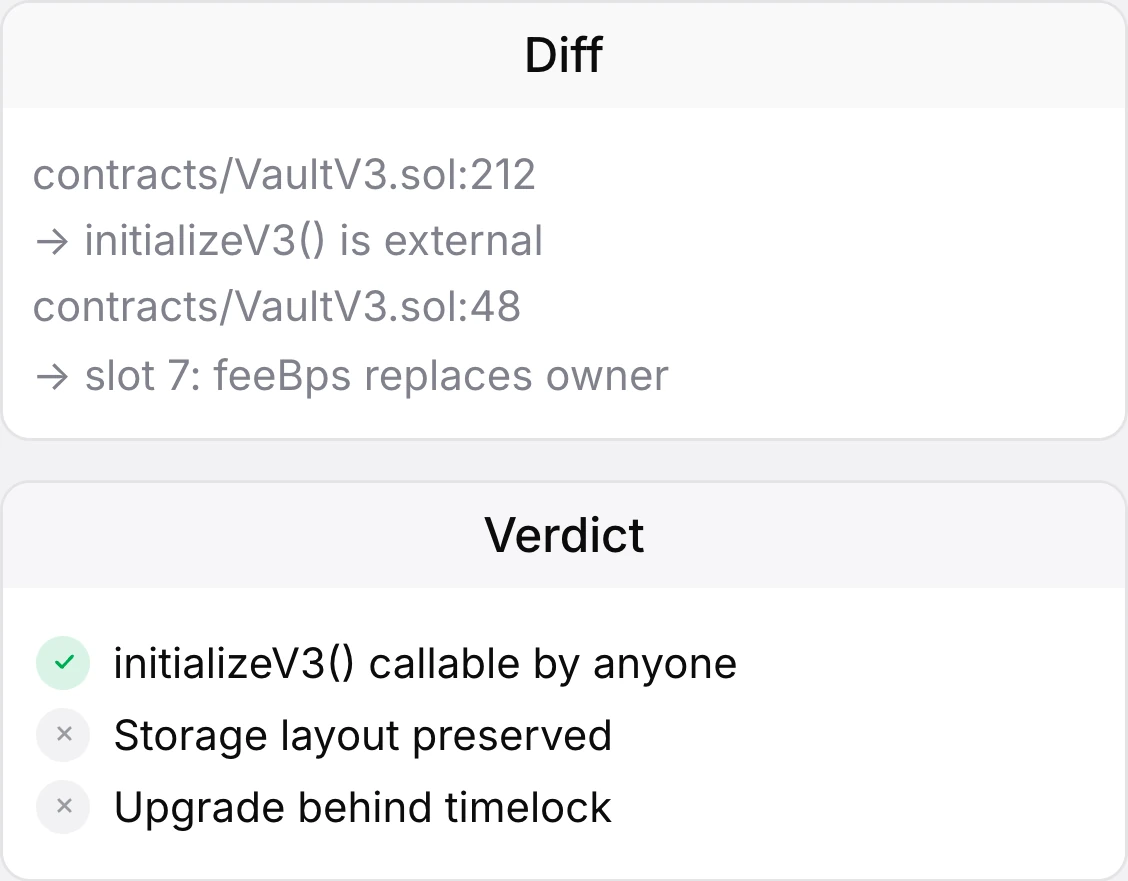
A review of a code change or upgrade before it ships: the diff, the code it touches, and the paths it opens.
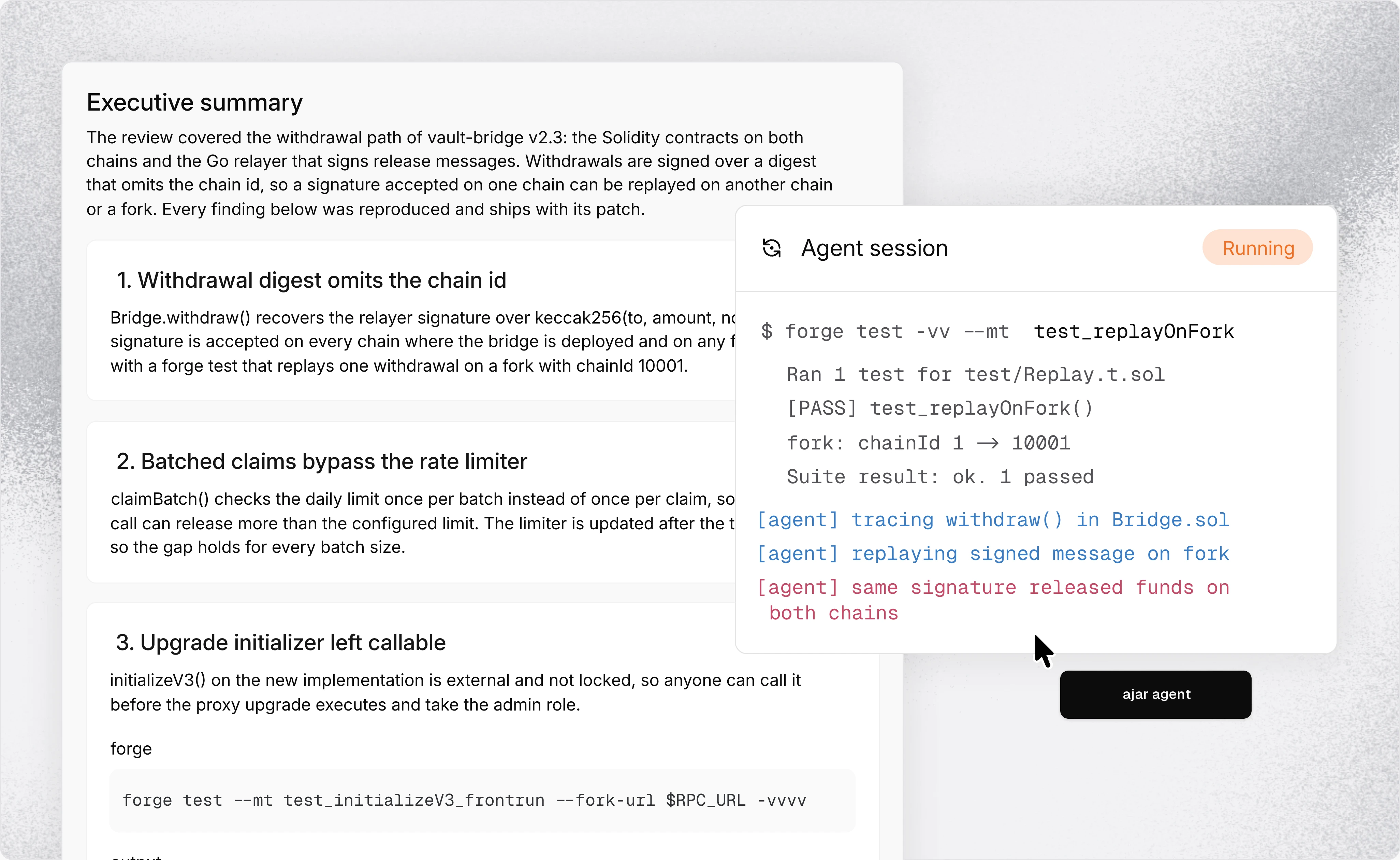
Human-signed reviews of the code that moves money, for token issuers, stablecoin and RWA issuers, wallet and custody teams, and protocols. Autonomous agents investigate deeply, reproduce every finding before it is reported and write the fix; a named reviewer signs the report.
A review of a code change or upgrade before it ships: the diff, the code it touches, and the paths it opens.
For token issuers preparing for an exchange listing: a signed report on the token and the contracts around it, ready for listing due diligence.
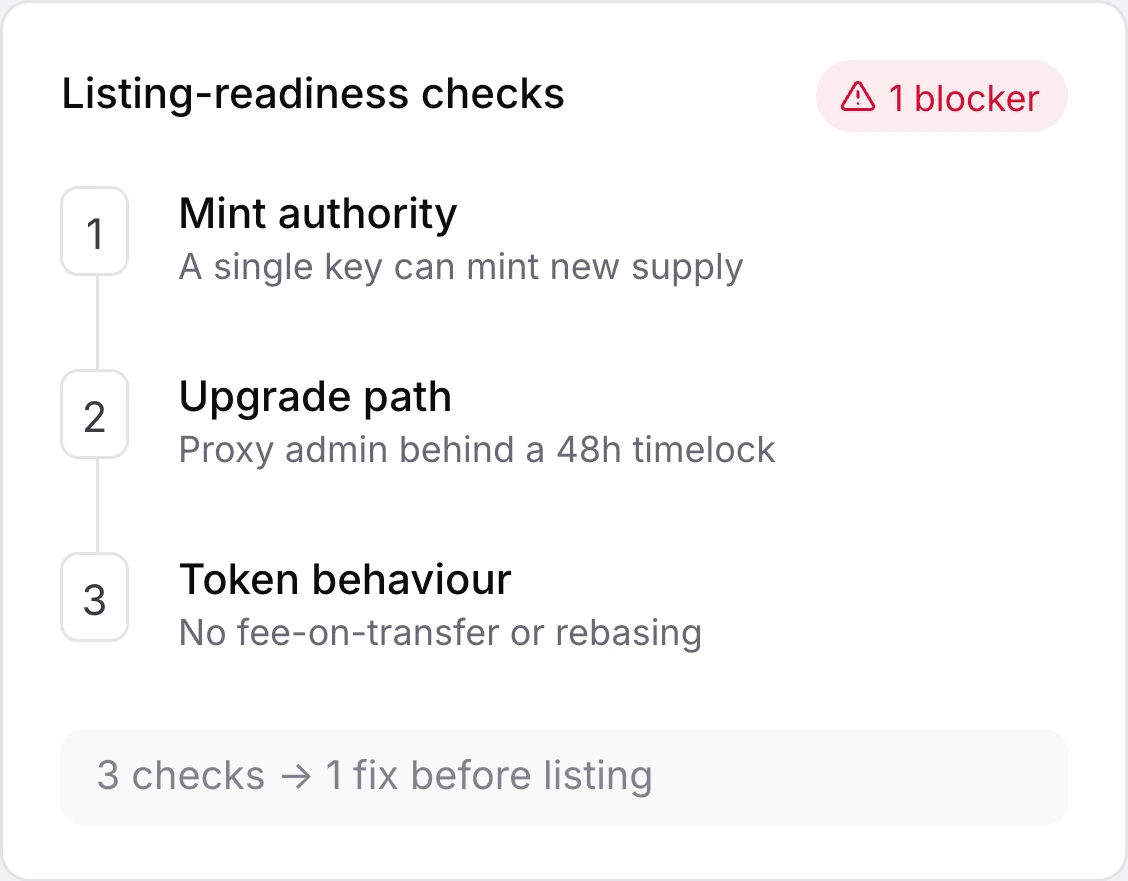
A full review before launch, covering the contracts, the services that move funds, and how they connect.
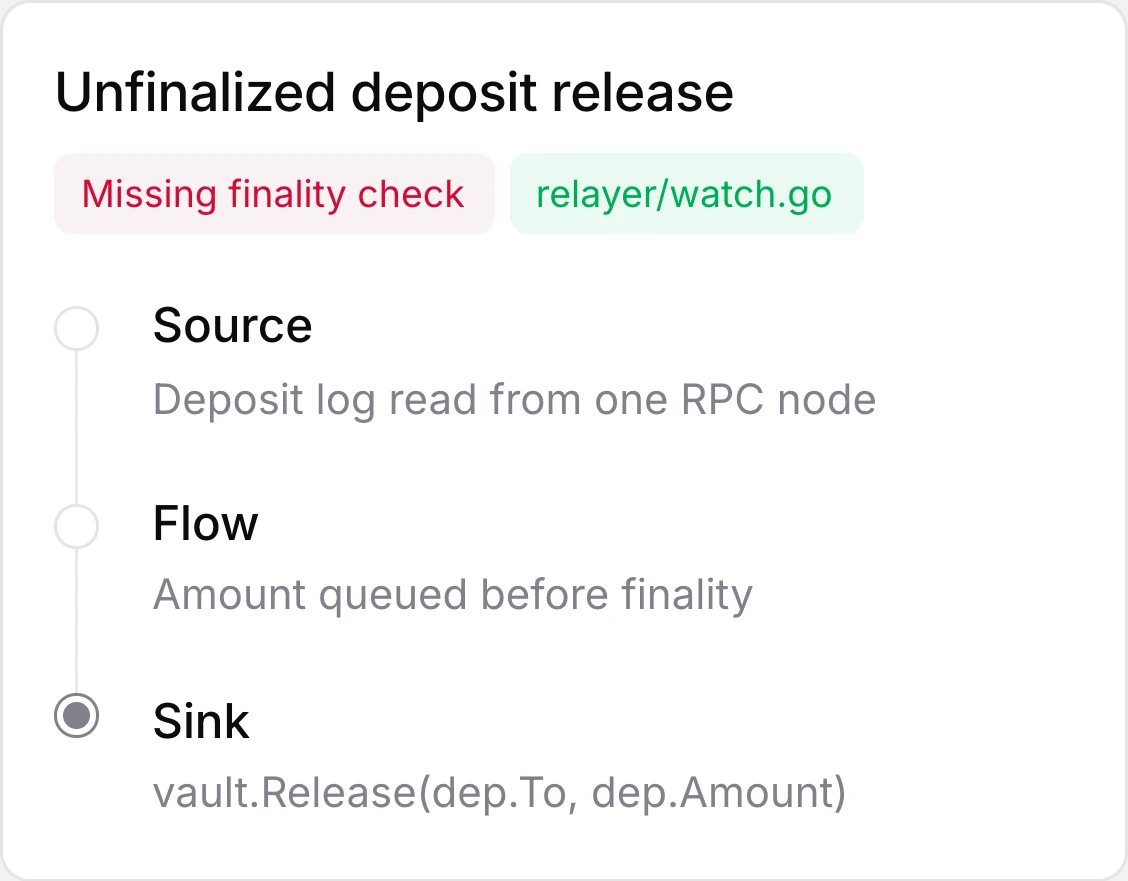
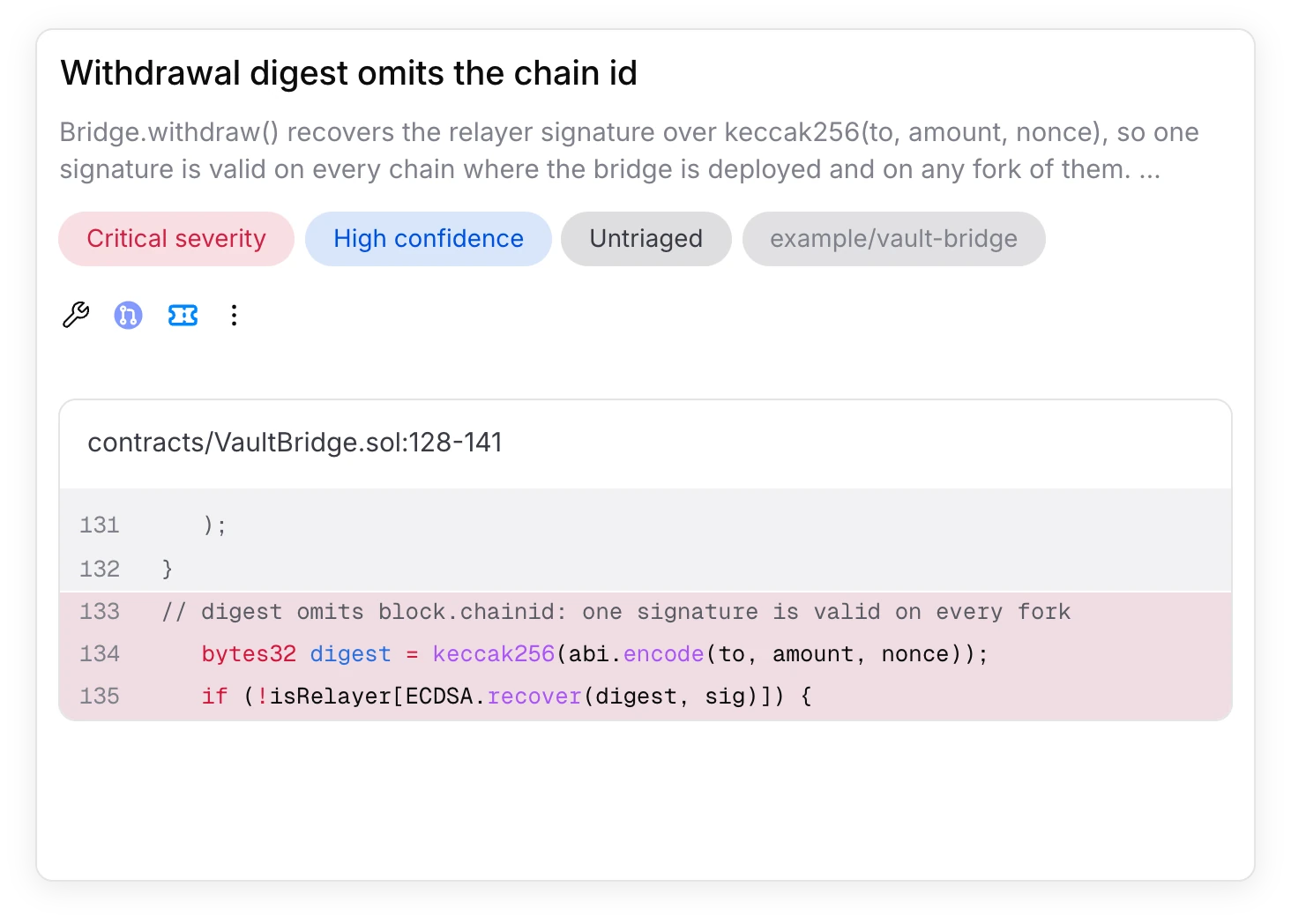
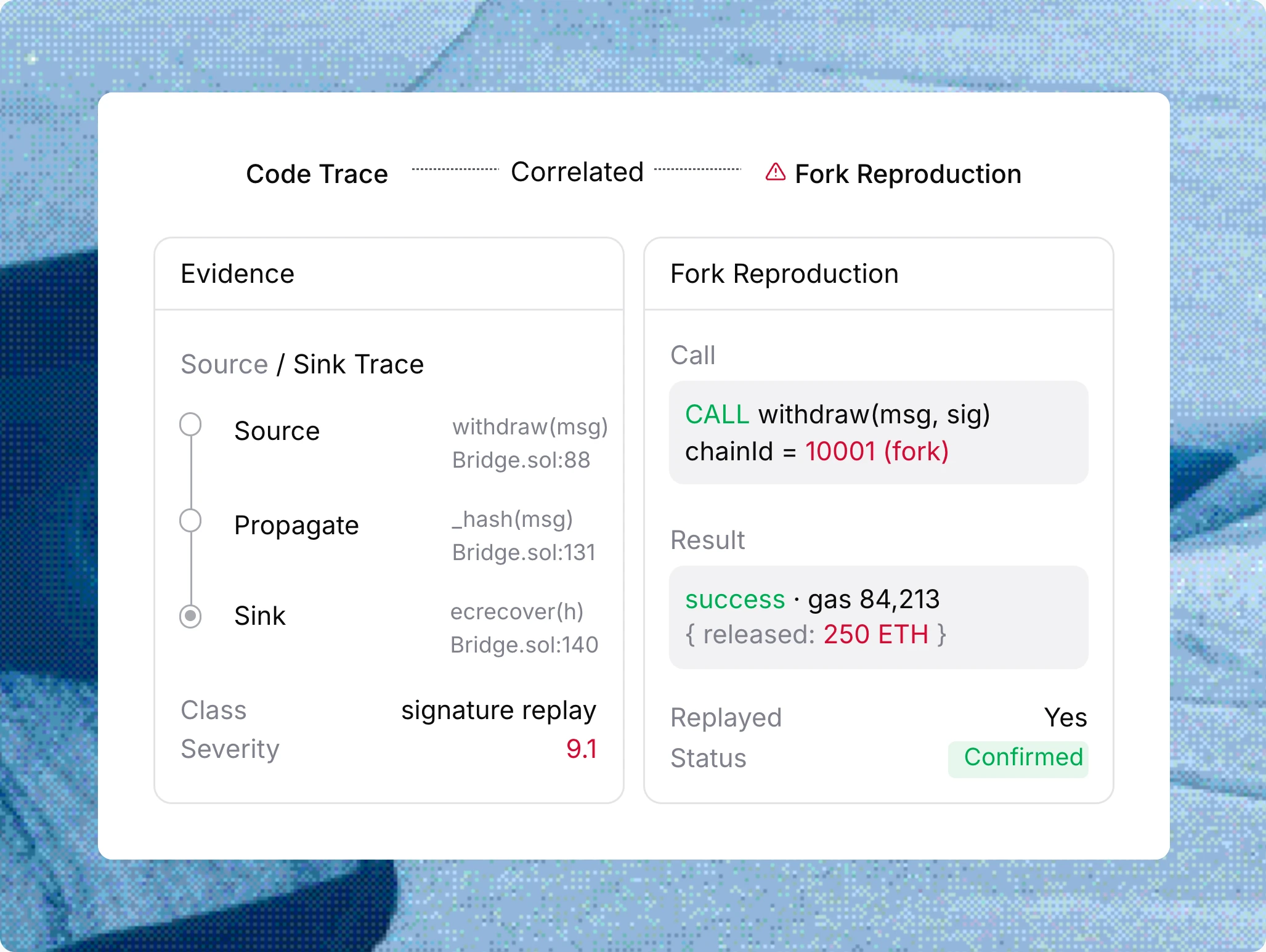
AI agents investigate the code in scope deeply, tracing business logic, value flows and trust boundaries. A lead becomes a finding only after it is reproduced, with the steps or test that show it.
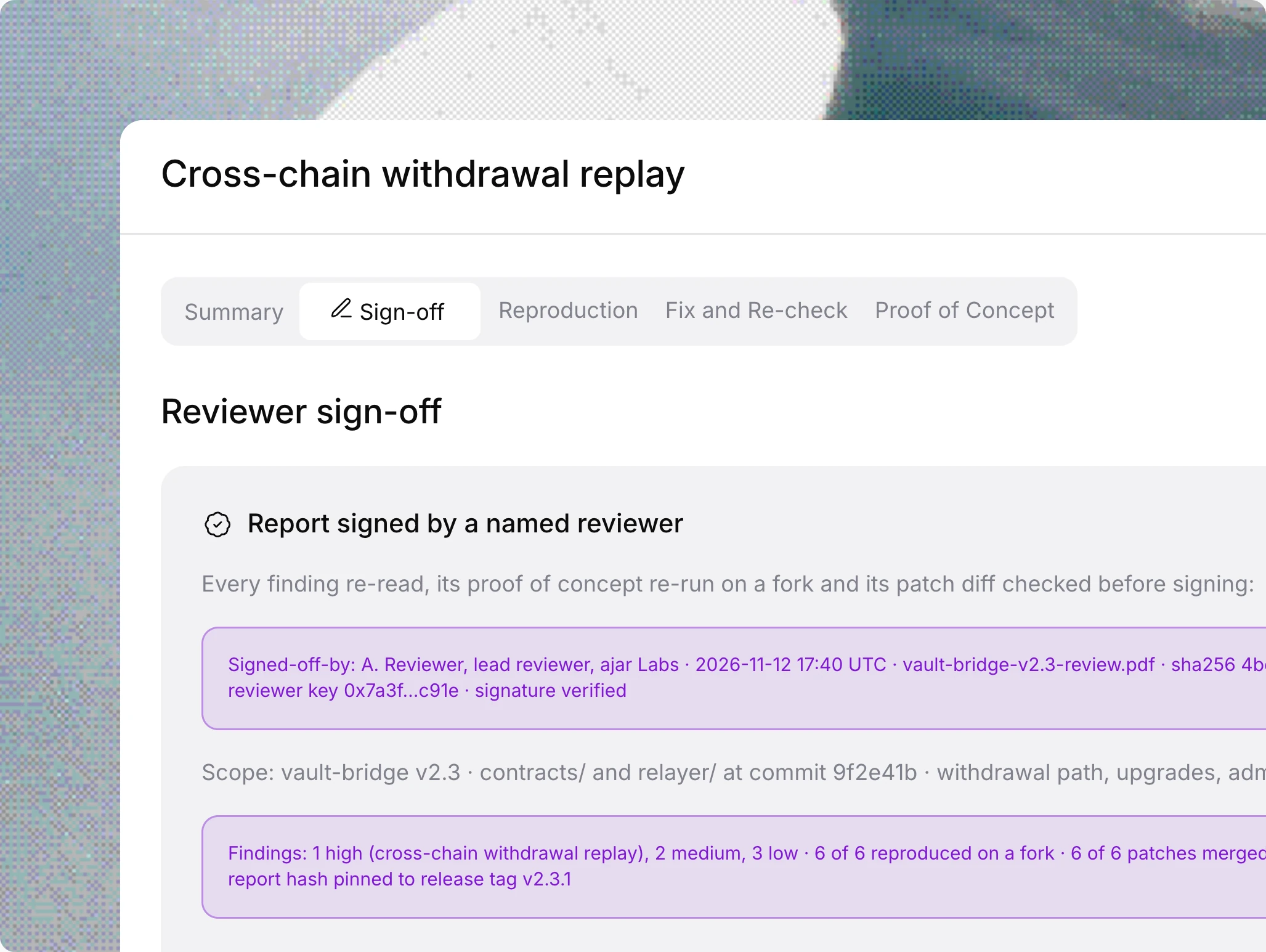
A named human reviewer reads every finding, checks the evidence and signs the report. You know who stands behind it.
ajar writes the patch for each finding autonomously and delivers it with the report and proof of concept, so your engineers review a ready fix. Once it is merged, the finding is re-checked against the change, and the report records the result.
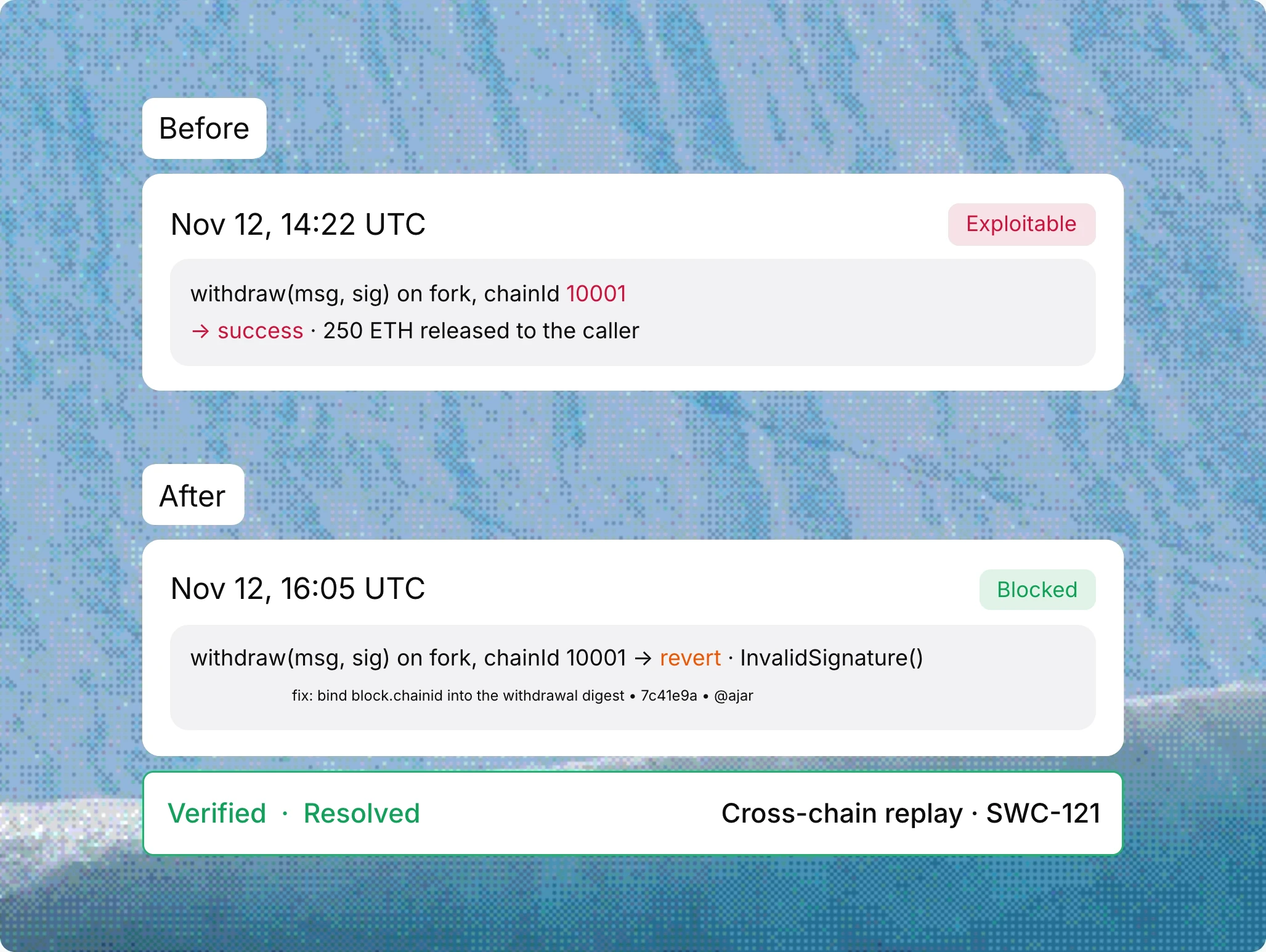
Smart contracts, chain and VM code, bridges, and wallet and custody services: the paths where a bug moves funds.
Every finding comes with a proof of concept that reproduces it and a patch ajar wrote autonomously. Leads that do not reproduce are not reported.
A named reviewer signs the report, and fixes are re-checked before it is final.
Scope, turnaround and price are agreed for each review. Tell us what you are shipping.
Find real vulnerabilities by tracing business logic, data flows, and cross-service interactions across your codebase, and fix them autonomously.
ajar reasons about business logic and cross-service data flows the way a security engineer does, so the only findings you see are the ones that are genuinely exploitable.
Prove that what your signers and users run is the code you reviewed, and that nothing between commit and signature changed what gets signed.
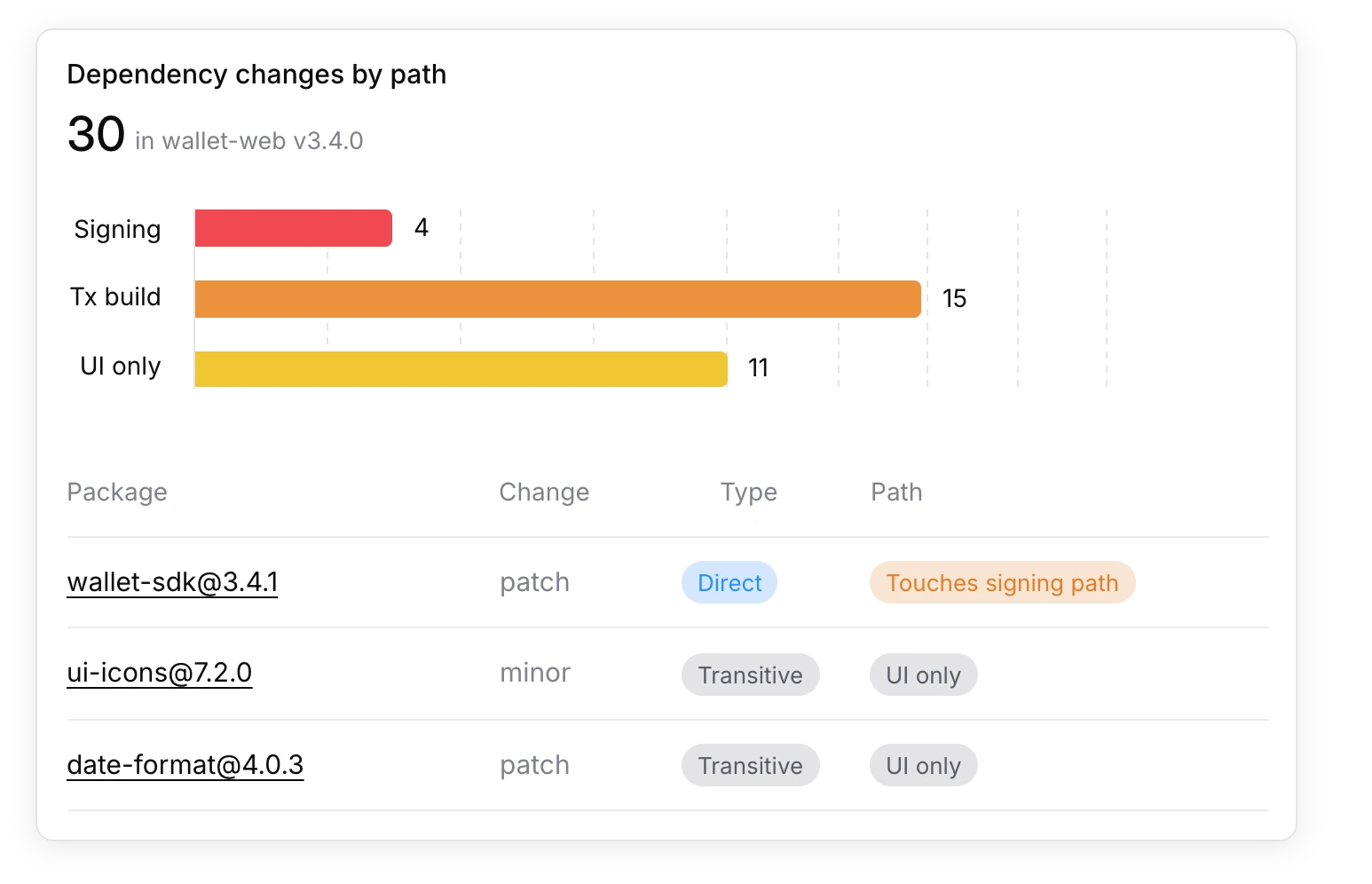
ajar compares what you serve with a rebuild of the tagged commit, reviews dependency changes that touch signing, tests that what users see equals what they sign, and fixes release-pipeline gaps autonomously as pull requests.