Supply Chain

ajar proves that what your signers, wallet users and key-holding servers run is exactly the code you reviewed, and that no dependency, build or release step changed what gets signed. Where the fix is a code change, ajar writes it autonomously and your engineers review the pull request, with the report and proof attached.

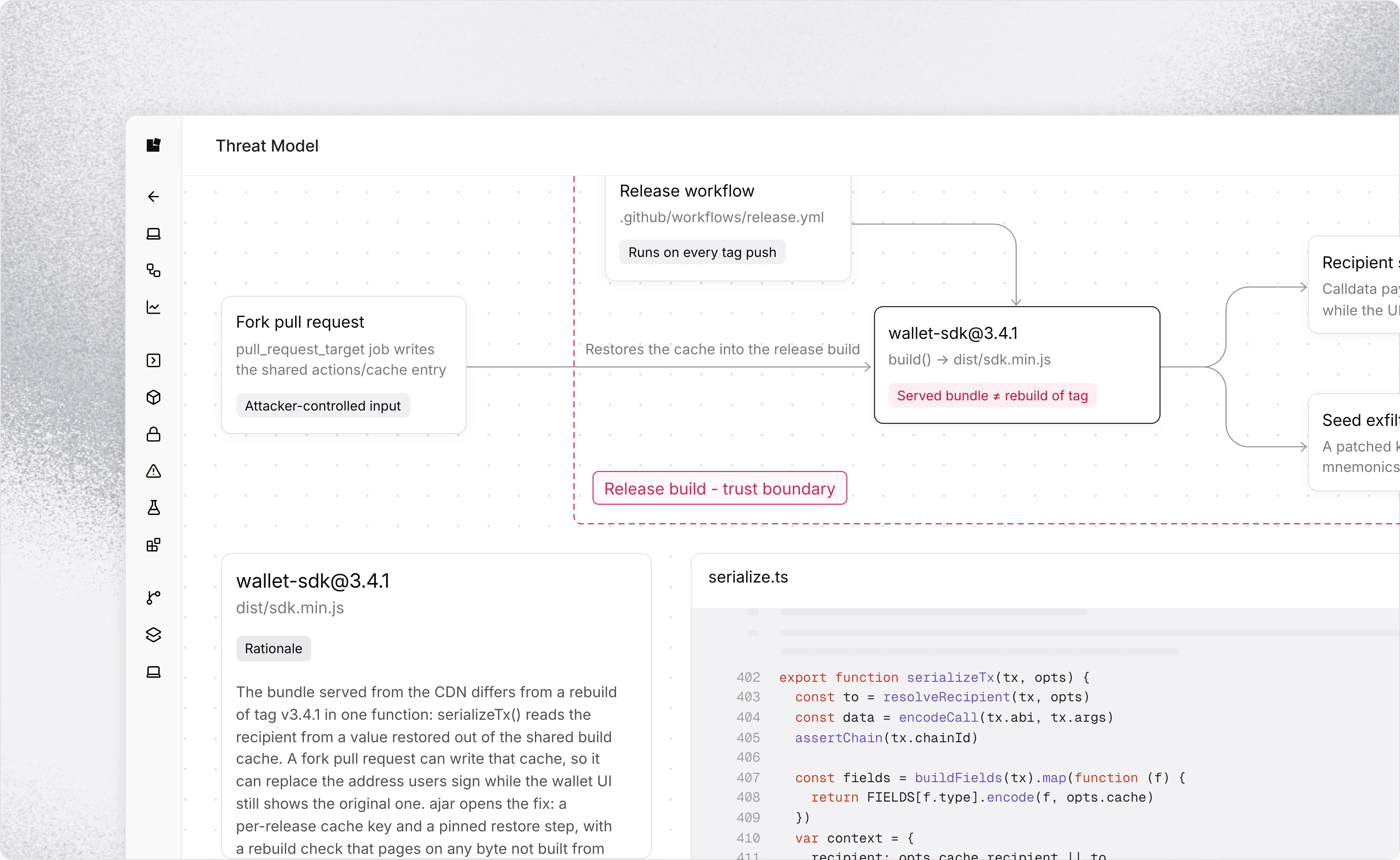
Threat model of a wallet SDK release: a fork pull request can write the cache the release build restores, so the served bundle differs from a rebuild of the tag, with the code that reads the recipient from the cache.

How ajar guards the path from commit to signature.

Prove the build you serve is the build you reviewed

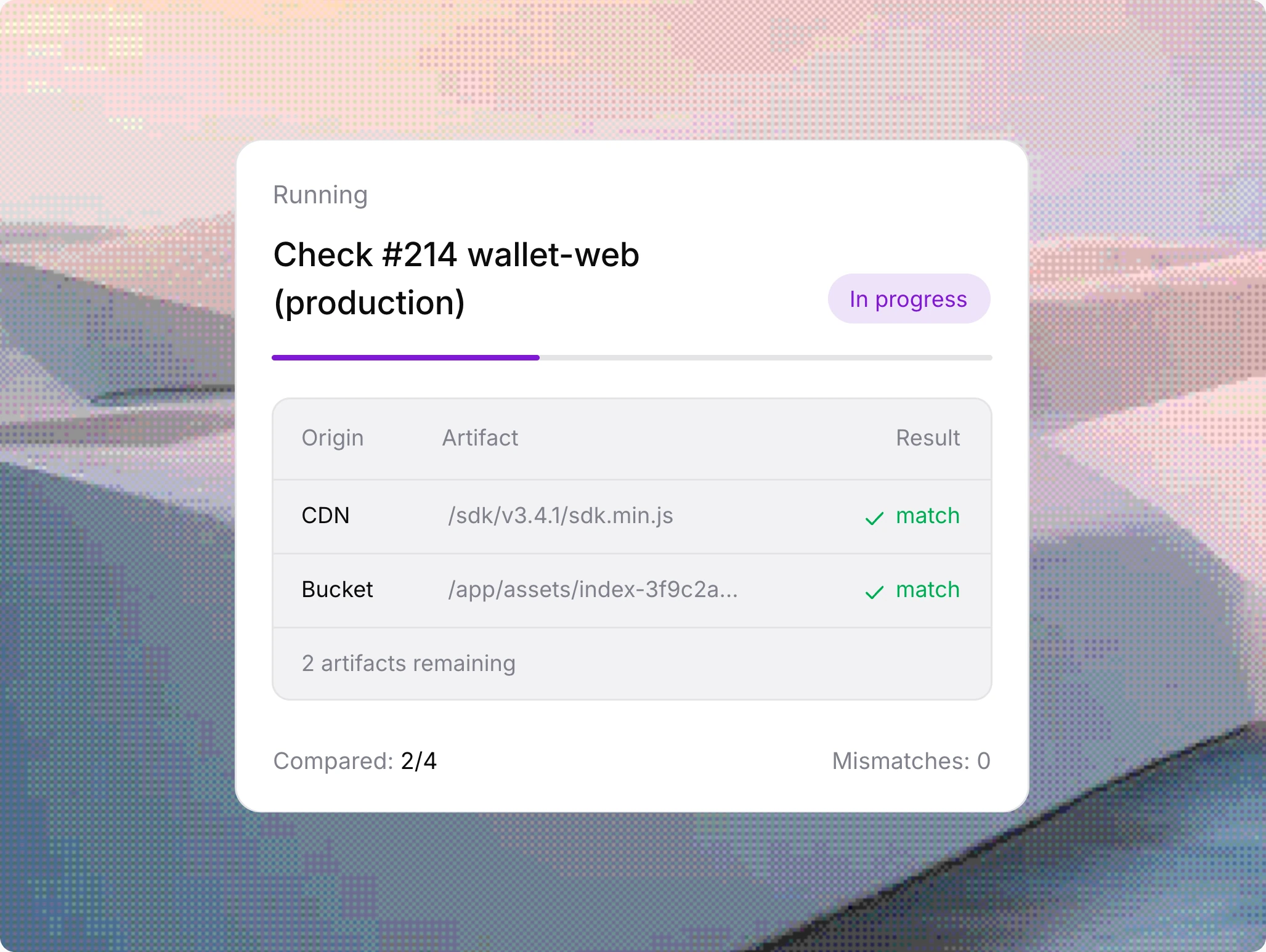
ajar rebuilds your signing UI, browser extension and CDN-served SDK from the tagged commit and continuously compares them with what your storage bucket, CDN and extension store actually serve. Any byte not built from a reviewed commit pages your on-call with a decoded explanation of what the changed code does to the transactions your users sign.

A running check that compares each artifact served in production, from the CDN and the storage bucket, with a rebuild of the tagged commit.

Review every dependency change that reaches the wallet

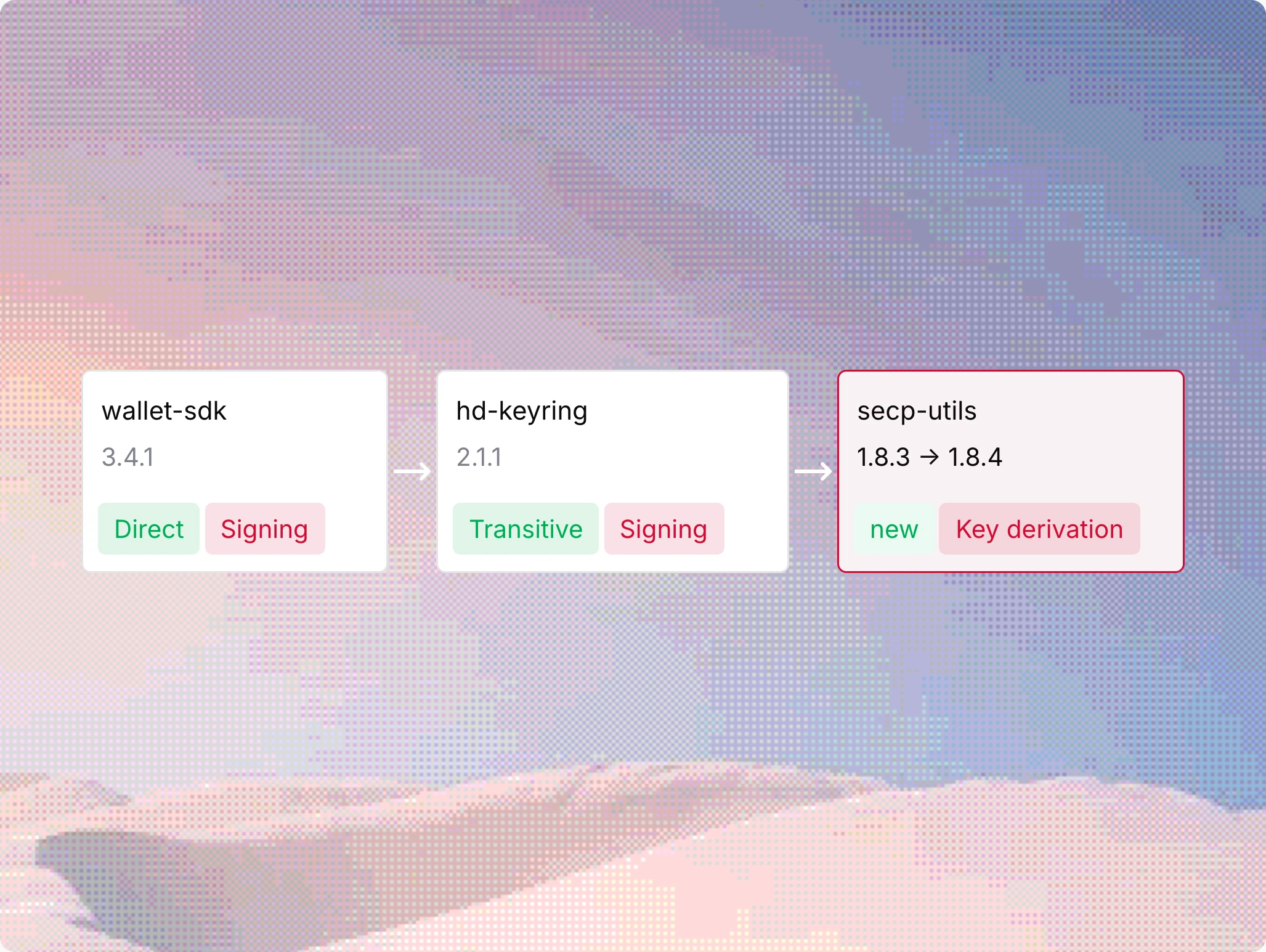
When a new dependency version or commit touches key derivation, signing or transaction construction, ajar reads it against the previous release and its tagged source, and runs it against canary keys and a mock wallet. A valid provenance attestation is not taken as proof: backdoored SDK releases have shipped with one. You see the exfiltration or address swap itself, and ajar opens the pin or rollback pull request autonomously.

Dependency chain from the wallet SDK through a keyring package on the signing path to a new release of a crypto utility that touches key derivation, flagged for review.

Close the paths that let someone else publish your release

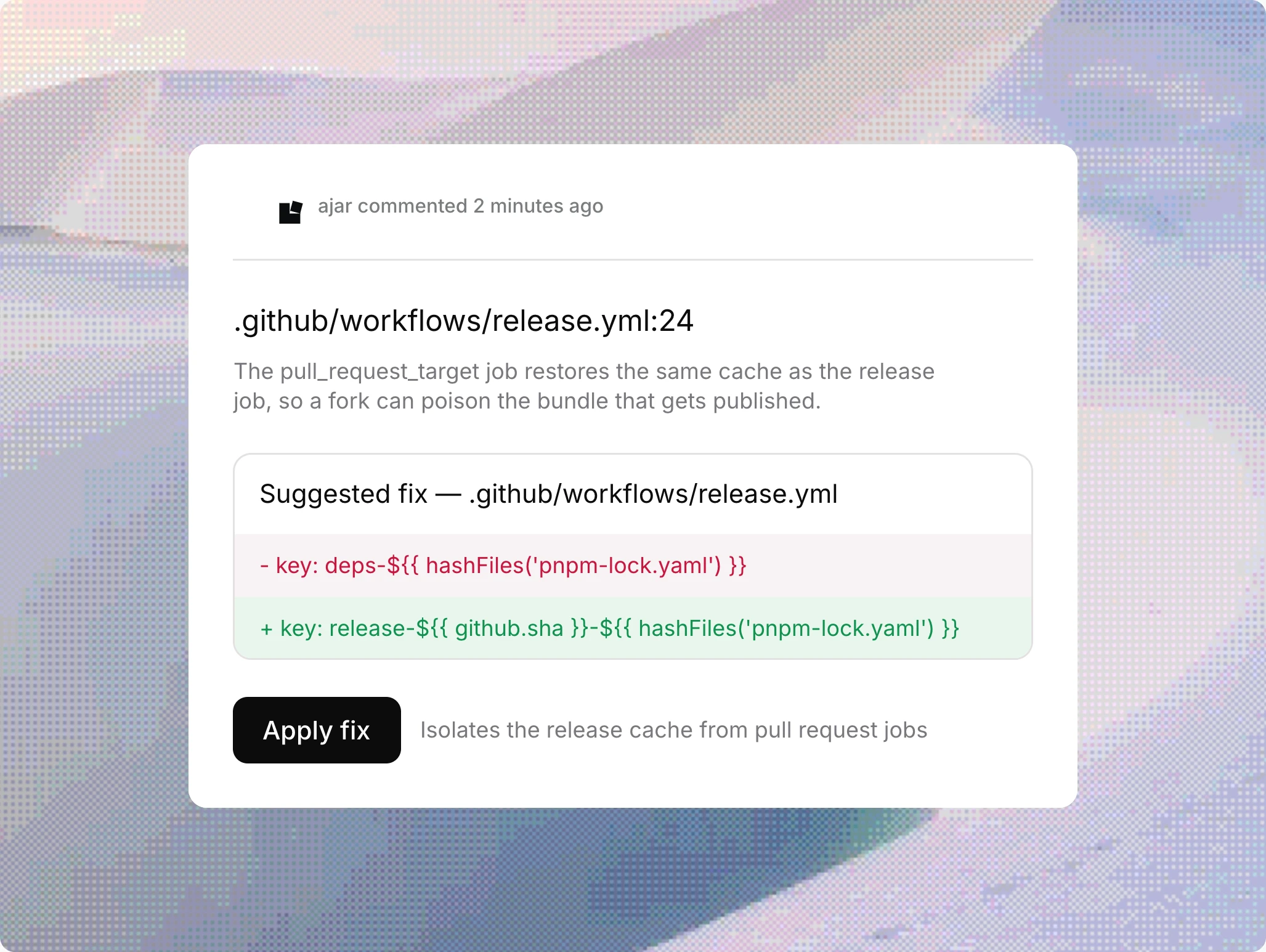
ajar finds the workflow paths that let a fork, a cache or a stolen token publish your packages or deploy your frontend: pull_request_target jobs that share a cache with release jobs, unpinned actions, and publish tokens reachable from CI. It fixes them autonomously with SHA pins, trusted publishing and isolated release caches. Each fix arrives as a pull request with the report and proof; your engineers review the patch and merge.

ajar comment on a pull request that isolates the release build cache from pull request jobs, with the workflow change shown as a diff.

From reviewed commit to signed transaction

What's shown equals what's signed

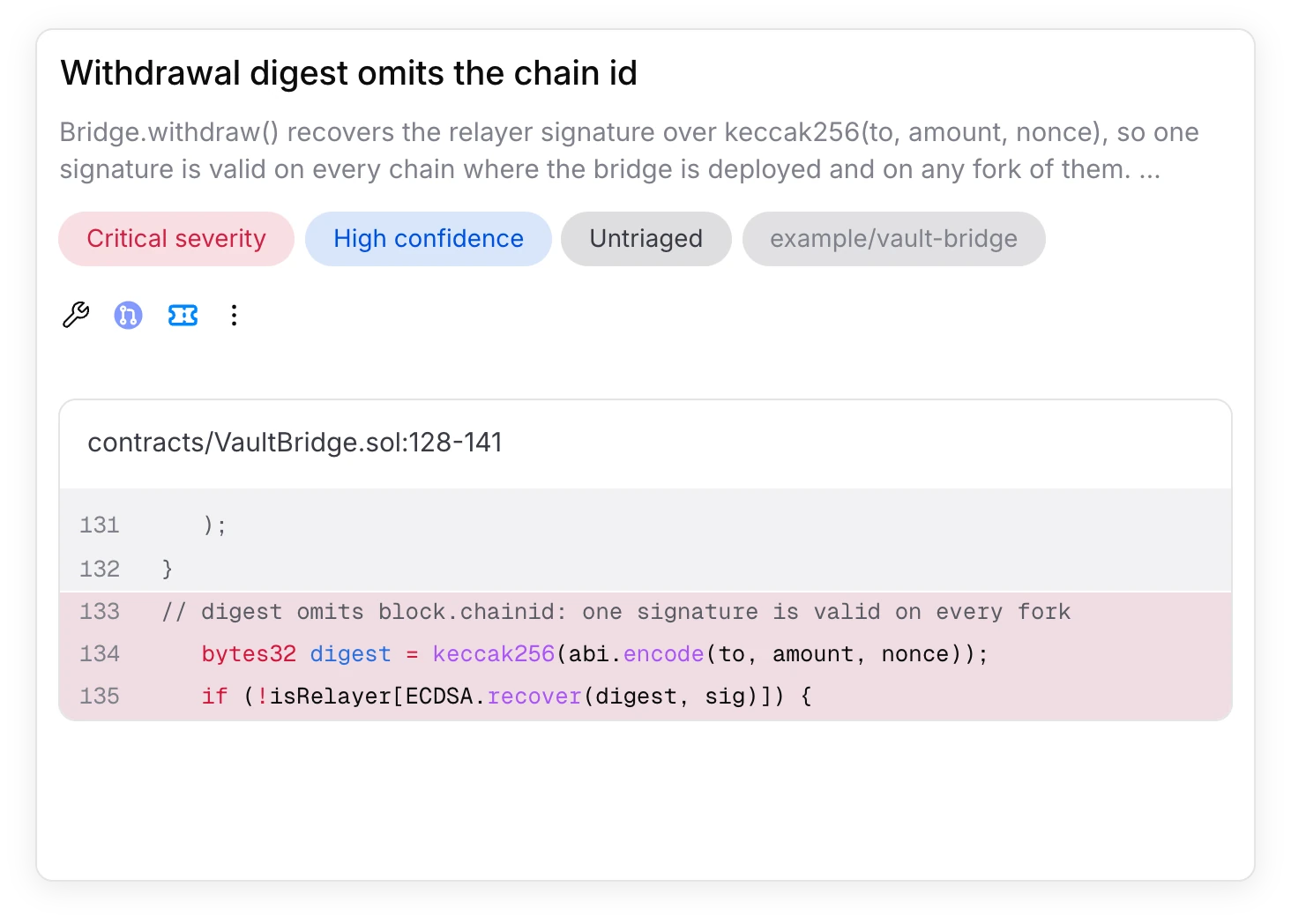
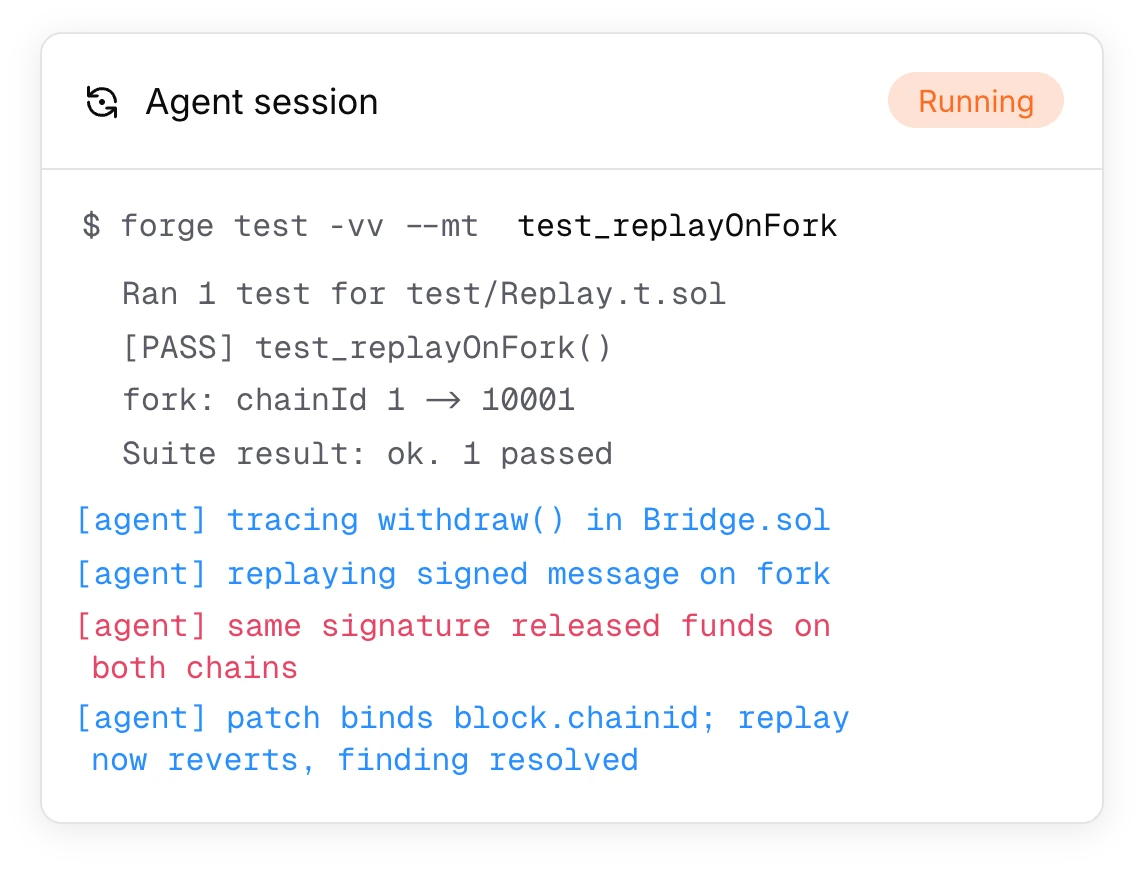
On every deploy and against production, ajar drives your transaction flows on a local chain fork with an instrumented signer, including your own treasury and cold-wallet addresses, and fails the run if the recipient, amount or calldata a user sees differ from what they sign.
Compromise response

When a package you depend on is hijacked, ajar scopes the exposure window across every lockfile, CI run and deployed bundle that ran it, and opens pin and rollback pull requests with a green build. Key and secret rotation comes as a plan scoped to what the payload could reach.

A signed record of every release

Each release leaves a signed record of the commit it was built from, the build it produced and what was served, ready to file as evidence for your PCI DSS and DORA reviews.

Works with the scanners you already run

ajar is not another registry-wide package feed. Alerts from the tools you already use trigger its reproduction and integrity checks on the code that reaches your signers.